Fresh mushrooms are easier to use well when storage and preparation are planned before the pan is hot. A simple routine—buy thoughtfully, refrigerate, inspect, clean, prepare, and cook—can reduce last-minute decisions and help you notice when a product should not be used. It also makes a small purchase more likely to become a meal rather than an abandoned refrigerator item.
This guide concerns cultivated mushrooms purchased as food from a reliable grower or retailer. It is not a method for making wild or unidentified mushrooms safe. No storage trick, washing method, or cooking technique can replace reliable identification and an appropriate food source.
Begin at the point of purchase
Choose a product you can identify clearly and a quantity you expect to use. Inspect the package and follow any instructions on the label. If a food looks spoiled, has damaged packaging, or raises a question you cannot resolve with the seller, choose another product instead of assuming preparation will fix the problem.
Keep mushrooms separate from raw meat, poultry, and seafood during shopping and transport. Plan the trip so perishable foods are not left sitting unnecessarily in a warm car. The FDA's produce guidance, linked below, includes mushrooms among perishable produce that belongs in refrigerated storage. That general food-safety framework is the basis for this article.
Refrigerate with a measured temperature
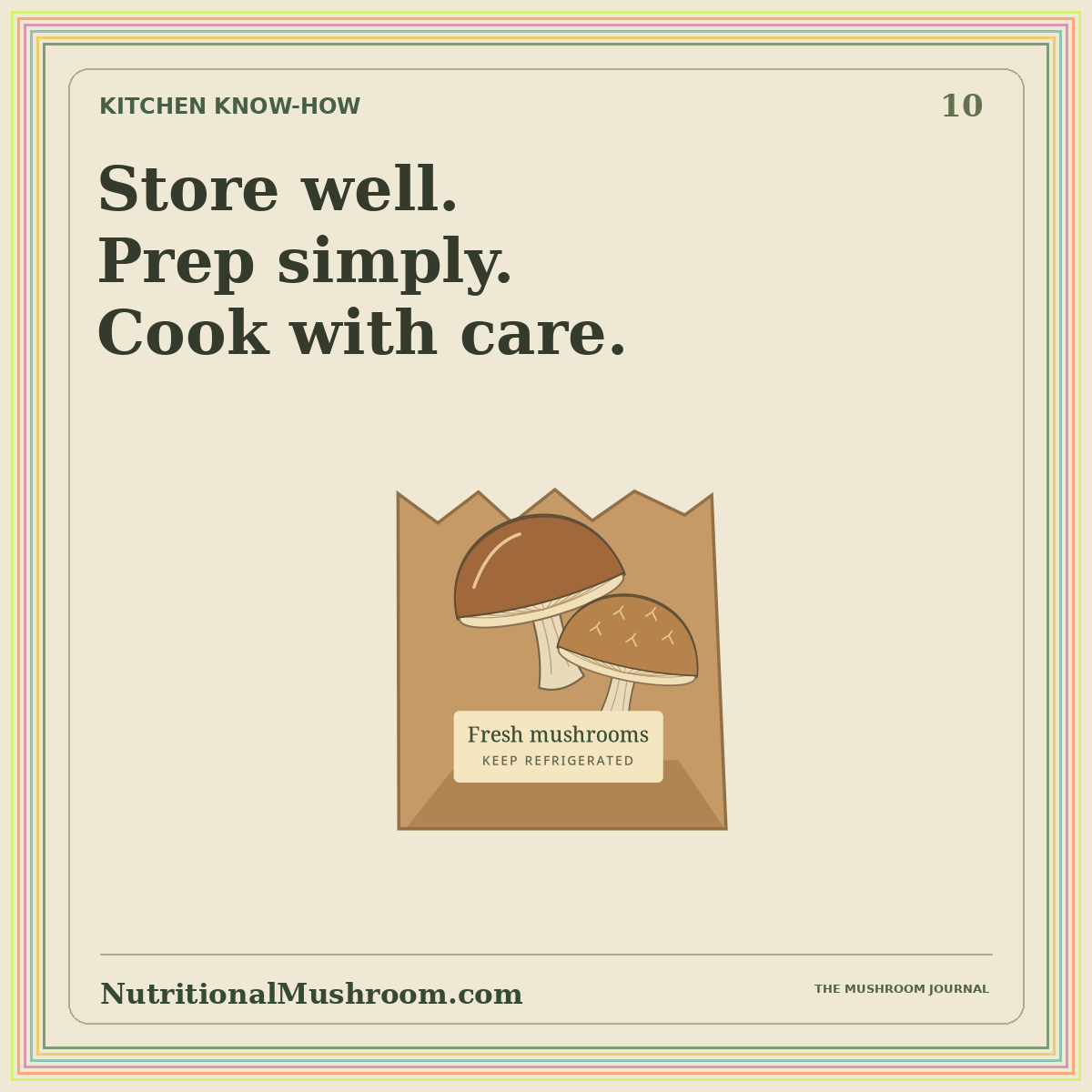
FDA recommends keeping perishable produce, including mushrooms, in a clean refrigerator at 40°F or below. A refrigerator thermometer is more informative than judging the air by touch. Check that the space you use is suitable and that the refrigerator is not so crowded that food is difficult to store or inspect.
Follow the product's packaging instructions. Do not assume that every retail package should be discarded immediately or that any household container provides the same storage conditions. If instructions are absent or unclear, ask the seller about the specific product. Keep enough identifying information to recognize the contents after transferring them to another food-safe container.
Give the mushrooms a visible place
Store the purchase where you will remember it without exposing it to drips from raw animal foods. A visible label with the purchase date can help you plan meals, but it is not a safety guarantee. The food's condition, handling history, and any label directions still matter.
Avoid burying a delicate pack beneath heavier items. Practical organization can prevent damage and makes inspection easier. If you regularly forget mushrooms at the back of the refrigerator, buy a smaller amount or plan the first meal for the day you shop. A better routine is more useful than a complicated storage hack.
Do not promise a universal shelf life
A fixed number of days cannot describe every variety, harvest condition, package, and handling history. Use any date and storage directions supplied with the product, while also paying attention to condition and appropriate food safety. A date label is not permission to use food that appears spoiled, and appearance alone cannot prove that food is safe.
Discard mushrooms that show clear spoilage or otherwise raise unresolved safety concerns. Do not taste a questionable piece to decide. When the issue is uncertainty about how long food was unrefrigerated or whether it was contaminated, smell and appearance are not reliable substitutes for safe handling. Seek appropriate guidance rather than trying to rescue the purchase at any cost.
Clean the work area before the ingredient
Wash your hands and use clean utensils, cutting boards, and counters. Keep the preparation separate from tools used for raw meat, poultry, or seafood unless those tools have been properly cleaned. It is easy to focus on visible debris on a mushroom while overlooking contamination from the surrounding workflow.
Arrange the ingredients before beginning so clean food does not have to share a cluttered surface with packaging or dirty utensils. Keep a food-safe container ready for prepared pieces. If you are cooking several components, decide the order in advance rather than moving between raw foods without cleaning the workspace appropriately.
Wash with water, not household cleaners
FDA advises washing produce under running water and does not recommend soap, detergent, or commercial produce wash. For mushrooms, use a gentle rinse shortly before preparation and remove visible debris with care. Pat the food dry with a clean paper towel or appropriate clean cloth before following your recipe.
Do not turn the task into a chemical treatment. Bleach, dish soap, and improvised disinfectant mixtures are not ingredients for cleaning mushrooms. The objective is an ordinary produce-preparation routine using safe water and clean equipment, not a promise to sterilize food. Follow any specific handling directions supplied for the food product.
Prepare pieces for the recipe
Trim away non-food growing material and any parts that the recipe or product instructions direct you to remove. Choose a consistent cut so the pieces are manageable in the dish. Thin slices, small chopped pieces, and larger portions serve different purposes; the right choice depends on the meal rather than a universal mushroom rule.
For a new cultivated variety, use a recipe written for that variety and form. Fresh, dried, and powdered products need different handling. Do not assume rehydration directions for one product apply to another, and do not replace a culinary ingredient with a concentrated supplement. Our variety guide helps connect the ingredient to a kitchen use.
Cook deliberately rather than by a slogan
Use a suitable recipe and cook cultivated specialty mushrooms thoroughly. A photograph of browned edges does not establish that every piece is prepared appropriately. Consider the size of the pieces and the method being used, and follow the instructions for any other ingredients in the dish as well.
Give yourself room to work. A crowded pan can make it harder to stir and observe the food, so divide a large purchase into batches when appropriate. Keep strong seasonings measured until you know the result. The goal is safe, enjoyable food, not preserving an assumed medicinal effect or reaching an unsupported universal cooking time.
Manage leftovers as a complete dish
Once mushrooms are part of a meal, consider all of the ingredients when deciding how to cool, refrigerate, and reheat it. A rice dish, an egg dish, and a plain cooked-mushroom portion are not the same food-handling problem. Follow suitable leftover guidance and do not leave a finished meal sitting out while deciding what to do with it.
Use food-safe containers, label what is inside, and plan when it will be eaten. A label helps organization but cannot reverse earlier mishandling. When you do not have a dependable plan for a large batch, cook less rather than assuming every extra portion can be kept indefinitely.
Treat preservation as a separate process
Drying, freezing, pickling, and canning each have their own requirements. Do not improvise a shelf-stable mushroom product by copying the appearance of a store-bought jar or by adjusting an unrelated recipe. A closed lid does not establish that a food is safely preserved.
Use current, tested food-preservation guidance appropriate to the mushroom and method when you want to go beyond ordinary refrigerated use. This article does not supply a canning schedule or a room-temperature storage method. For everyday cooking, buying a manageable amount can be simpler than taking on preservation before you are ready.
Build a routine you will repeat
Choose a meal before shopping, store the mushrooms promptly, and prepare them when you are ready to cook. Keep the necessary tools simple and the counter clear. If the routine repeatedly breaks down at the same point—such as buying too much—change that step rather than collecting more storage tricks.
Our easy mushroom meals provide several uses for a modest purchase. The nutrition hub puts the ingredient in a broader food context. Neither depends on using every piece of a questionable product; discarding unsafe or spoiled food is a sensible decision, not a failure of meal planning.
The takeaway
Reliable sourcing, cold storage, clean preparation, and appropriate cooking work together. No single rinse or refrigerator container replaces the rest of the process. Follow the food label, use safe water rather than cleaners, and do not taste or cook uncertain food in an attempt to make it safe.
Source and further reading
For the temperature, separation, handwashing, and produce-cleaning recommendations, read FDA guidance on selecting and serving produce safely. Product-specific instructions and applicable guidance for other meal ingredients remain important.